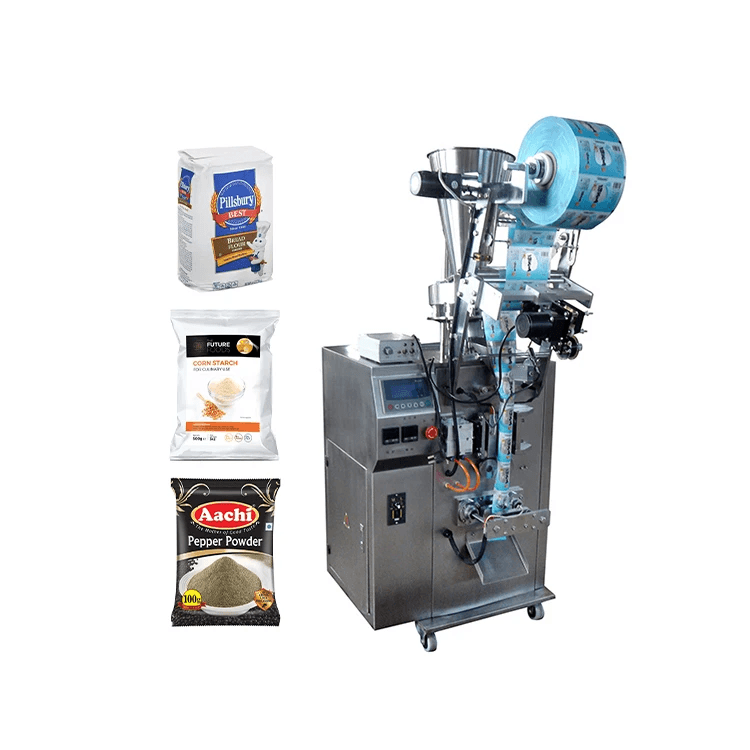
Vertical Form Fill Seal (VFFS) machines are widely used in food, pharmaceutical, chemical, and daily-use product packaging due to their high efficiency, compact footprint, and high degree of automation. However, during long-term operation, VFFS machines may experience various technical and process-related issues that affect packaging quality, production efficiency, and operating costs.
This article systematically explains the most common problems encountered in VFFS machines, analyzes their root causes, and provides practical, operation-oriented solutions to help manufacturers improve line stability and reduce unplanned downtime.
Film Feeding and Bag Length Problems
Unstable bag length, misaligned cutting positions, or inconsistent bag size are among the most frequent VFFS issues. These problems usually stem from unstable film pulling, incorrect tension settings, worn pull belts, or inaccurate photoelectric mark detection when using printed films.
To resolve these issues, operators should ensure the film tension is stable and symmetrical, allowing smooth downward movement without slipping. Pull belts and rollers must be inspected regularly and replaced when worn. The photo-eye sensor should be cleaned, correctly positioned, and calibrated to match the registration marks on printed films. Encoder synchronization between film feeding and sealing should also be verified.
Poor Sealing Strength and Package Leakage
Weak seals, seal peeling, or micro-leakage directly compromise product safety and shelf life, especially for food and pharmaceutical applications.
These problems are commonly caused by incorrect sealing temperature, insufficient or uneven sealing pressure, short sealing time, or contamination of sealing jaws by product residue. In some cases, the packaging film structure may be incompatible with the sealing system.
Corrective actions include adjusting sealing temperature based on film material specifications, ensuring uniform pressure across sealing jaws, and increasing dwell time if necessary. Sealing jaws must be kept clean and free of product dust. If seal quality remains unstable, the film laminate structure and thickness should be reviewed to ensure compatibility with the VFFS machine.
Wrinkled, Skewed, or Poorly Shaped Bags
Wrinkling along the seals or uneven bag appearance reduces packaging aesthetics and may weaken seal integrity.
This issue is often caused by mismatched forming tube size, incorrect forming collar alignment, uneven film tension, or improper film tracking. Film width that does not match the forming tube can also create wrinkles.
To fix this, the forming tube must be properly sized for the target bag dimensions. The forming collar should be centered and aligned to guide the film evenly. Film tracking systems should be adjusted to keep the film running straight, and tension on both sides of the film should be balanced.
Inaccurate Filling Weight or Volume
Inconsistent filling accuracy leads to regulatory non-compliance, customer complaints, and increased product giveaway.
This problem typically arises from unstable product flow, incorrect dosing calibration, product bridging, density variation, or wear in the filling system. For liquid products, temperature changes can alter viscosity and affect dosing precision.
Solutions include regular calibration of the dosing system under real production conditions, stabilizing upstream product feeding, and inspecting augers, weighers, or pumps for wear or blockage. Maintaining consistent product temperature is especially important for liquid and semi-viscous products.
Product Spillage and Seal Contamination
Product spillage during filling can contaminate the sealing area, leading to seal defects and frequent machine stoppages.
Spillage is usually caused by improper filling timing, excessive drop height, poor funnel design, or uncontrolled powder dispersion. Fine powders and dusty materials are particularly problematic.
To reduce spillage, filling should occur only after the bag is fully formed and stable. Drop height should be minimized, and product settling devices or dust extraction systems can be added. For powders, anti-static measures and optimized filling funnels help improve product control.
Film Breakage and Tearing
Unexpected film tearing results in production interruptions and increased packaging waste.
Common causes include excessive film tension, sharp edges on film-contact parts, overheating at the sealing jaws, or low-quality packaging film. Sudden acceleration or deceleration of the machine can also stress the film.
Corrective measures involve reducing film tension to the minimum required for stable operation, inspecting all film-contact surfaces for burrs or sharp edges, and optimizing sealing temperature. Using soft start and stop functions can further reduce mechanical stress on the film.
Mechanical Instability and Frequent Alarms
Machine vibration, irregular motion, or repeated alarms indicate mechanical or control system issues.
These problems are often linked to insufficient lubrication, worn bearings, loose fasteners, incorrect parameter settings, or faulty sensors. Electrical noise or unstable signals may also disrupt operation.
A structured preventive maintenance program is essential. Regular lubrication, tightening of mechanical components, inspection of moving parts, and verification of sensor functionality can significantly improve machine stability. Parameter settings should be reviewed whenever product or film changes are made.
Summary
VFFS machines are highly reliable when correctly configured and maintained, but their performance depends on precise coordination between film handling, sealing, filling, and control systems. Most common problems—such as seal defects, filling inaccuracies, or film handling issues—can be effectively resolved by identifying root causes related to settings, wear parts, and material compatibility.
By implementing proper setup procedures, regular maintenance, and systematic troubleshooting, manufacturers can achieve stable operation, consistent packaging quality, and lower total operating costs.
VFFS Packaging Solutions from LTPM CHINA
Zhejiang Leadtop Pharmaceutical Machinery Co., Ltd (LTPM CHINA) provides professional VFFS packaging machines and turnkey solutions for food and pharmaceutical manufacturers. Our systems feature:
Stable film transport and precise sealing control
- Flexible filling options for powders, granules, and liquids
- GMP-compliant design and easy maintenance
- Customized configurations with long-term spare parts support
- Contact LTPM CHINA to improve VFFS machine reliability and optimize your packaging line performance.